
By EcoStrateGix – ESG Consultants & Sustainability Partners
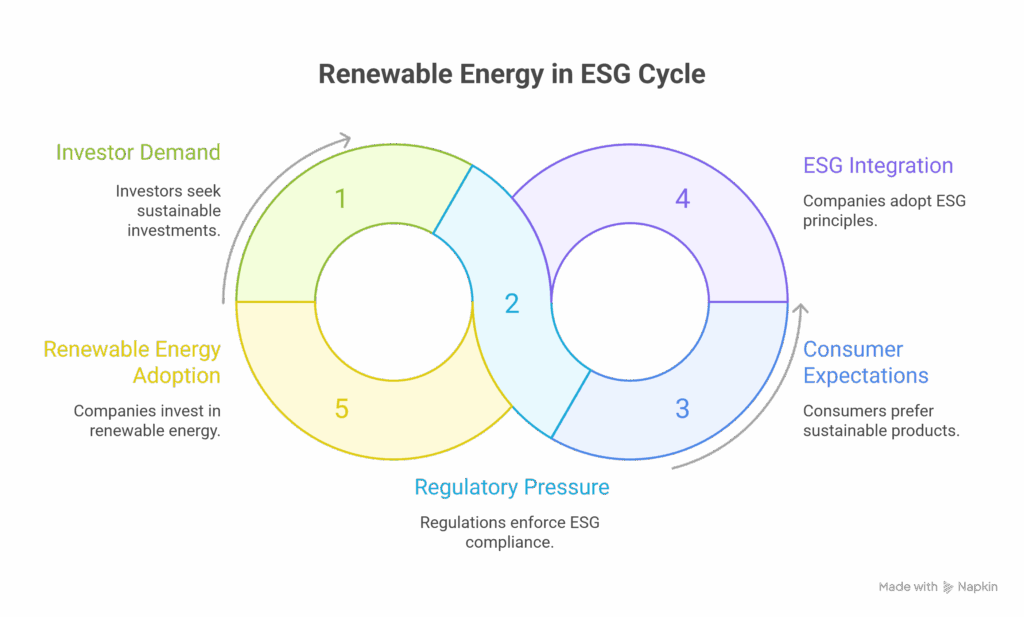
In today’s business landscape, sustainability is no longer an option—it’s a necessity. As investors, regulators, and consumers increasingly demand accountability and transparency, organizations are integrating ESG (Environmental, Social, and Governance) principles into their core strategies. Among the most impactful and actionable levers within this framework is renewable energy.
Why Renewable Energy Matters in ESG
1. Environmental Stewardship
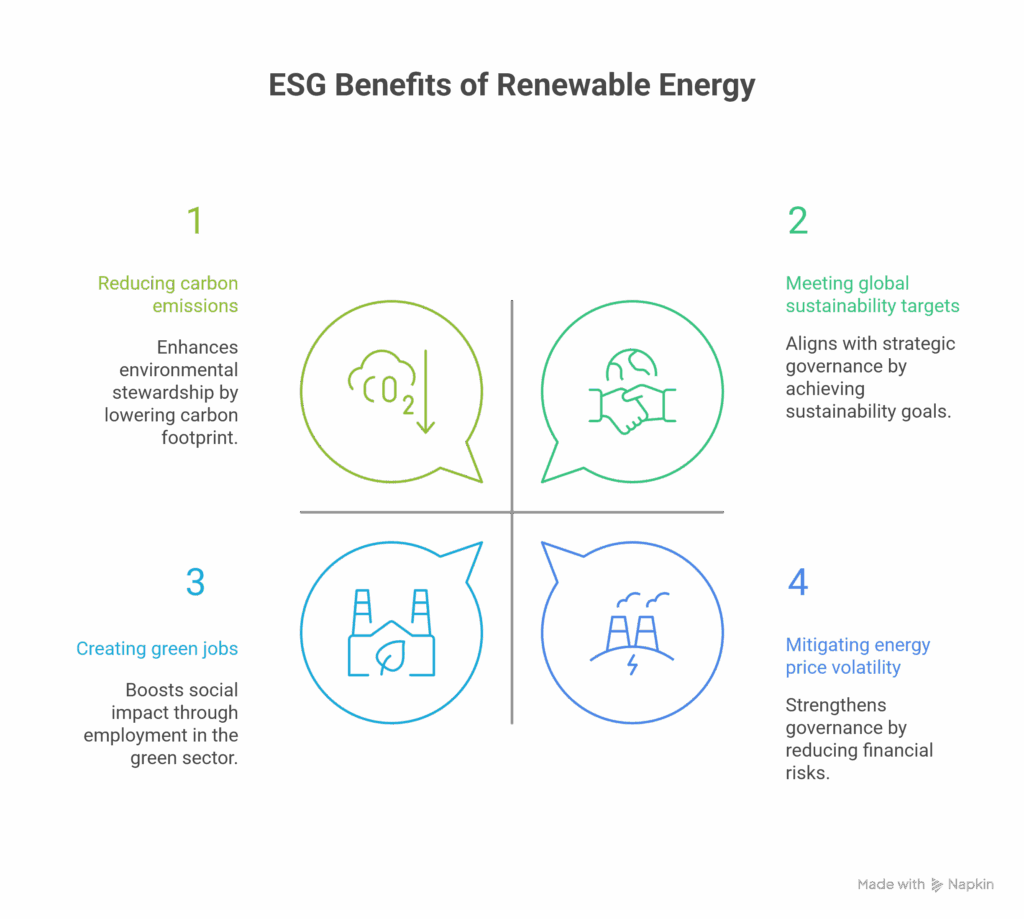
The environmental component of ESG focuses on how a company reduces its impact on the planet. Renewable energy sources such as solar, wind, biomass, and hydropower dramatically reduce carbon emissions and dependence on fossil fuels. By transitioning to clean energy, companies can lower their carbon footprint, meet global sustainability targets (like the Paris Agreement), and align with frameworks like the UN Sustainable Development Goals (SDGs).
More than just reducing harm, renewable energy is a proactive investment in environmental regeneration and climate resilience—an expectation from today’s conscious stakeholders.
2. Social Impact
The ‘S’ in ESG is all about people—employees, communities, and society at large. Renewable energy projects contribute significantly to social development by:
- Creating employment in the green economy
- Improving public health by reducing air and water pollution
- Expanding access to energy in underserved regions
By supporting or investing in renewable energy initiatives, organizations can drive inclusive growth, demonstrate a commitment to social equity, and strengthen their social license to operate.
3. Governance and Long-Term Risk Mitigation
Good governance is about foresight, accountability, and resilience. Companies embracing renewables are not just making an environmental statement—they are showing strategic governance. Clean energy investments help mitigate risks associated with:
- Energy price volatility
- Climate-related regulatory changes
- Supply chain disruptions
Furthermore, renewable energy adoption enhances ESG reporting, offering measurable metrics on emissions reduction, energy efficiency, and operational sustainability.
Renewable Energy as a Strategic ESG Asset
Renewable energy is no longer just a compliance tool—it’s a source of innovation, brand value, and long-term profitability. Organizations that integrate renewable energy into their ESG strategy enjoy:
- Enhanced investor confidence
- Access to green finance and ESG-linked loans
- Competitive differentiation in the marketplace
- Better alignment with stakeholder values
From rooftop solar on office buildings to power purchase agreements with wind farms, businesses have a range of scalable options to demonstrate ESG leadership through clean energy.
How EcoStrateGix Can Help
At EcoStrateGix, we work with companies to embed renewable energy solutions into their ESG strategy in a practical, data-driven, and impactful manner. Whether you’re just starting your sustainability journey or scaling up for net-zero commitments, our team of experts offers:
- ESG roadmap and strategy design
- Renewable energy feasibility assessments
- Carbon footprint audits and reduction plans
- ESG disclosures aligned with BRSR, GRI, TCFD, CDP, and more
Final Thoughts
The global energy transition is not just a trend—it is a transformation. Companies that act now will lead tomorrow. Renewable energy is more than an environmental imperative; it is a catalyst for sustainable growth and responsible governance.
Let renewable energy power your ESG success.
📩 Get in touch with EcoStrateGix at info@ecostrategix.com or visit www.EcoStrateGix.com to explore how we can support your ESG ambitions.