
In recent years, Environmental, Social, and Governance (ESG) investing has witnessed remarkable growth in India, reflecting a global shift towards responsible and sustainable investment practices. With climate change, social equity, and ethical governance becoming central to investment decisions, India is embracing ESG not only as a regulatory necessity but also as a strategic opportunity for long-term value creation.
What is ESG Investing?
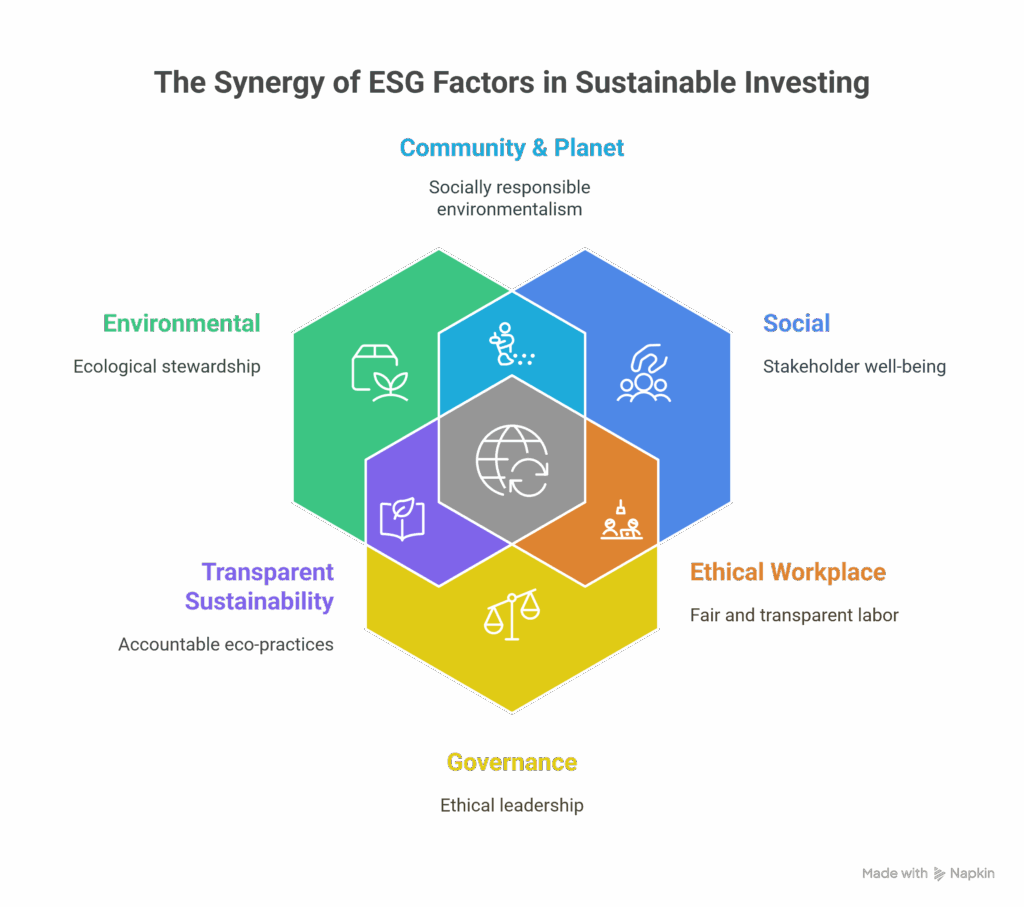
ESG investing involves selecting companies for investment based on their performance in three key areas:
- Environmental (E): Impact on nature—carbon footprint, renewable energy, waste management, etc.
- Social (S): Treatment of employees, community engagement, diversity, and human rights.
- Governance (G): Ethical leadership, transparency, shareholder rights, and compliance.
Unlike traditional investing, ESG investing balances financial returns with sustainable impact, making it a compelling choice for modern investors.
Key Trends Driving ESG Investing in India
1. Regulatory Push and Mandatory Disclosures
The Securities and Exchange Board of India (SEBI) has made ESG reporting mandatory for the top 1,000 listed companies through the Business Responsibility and Sustainability Report (BRSR) framework. This has increased transparency and accountability, prompting more businesses to align their operations with ESG principles.
2. Boom in Green Finance
India has seen a surge in:
- Green Bonds
- Sustainability-Linked Loans
- ESG Mutual Funds and ETFs
Major companies like Larsen & Toubro, NTPC, and Adani Green Energy are tapping into green financing to fund renewable energy and infrastructure projects. India is also one of the leading issuers of green bonds in emerging markets.
3. Investor Demand for Sustainable Options
Indian retail and institutional investors are showing increased interest in sustainable investments:
- As of 2024, ESG-focused mutual funds in India have crossed ₹15,000 crores in Assets Under Management (AUM).
- Millennials and Gen Z investors are particularly driving demand for investments that reflect their values.
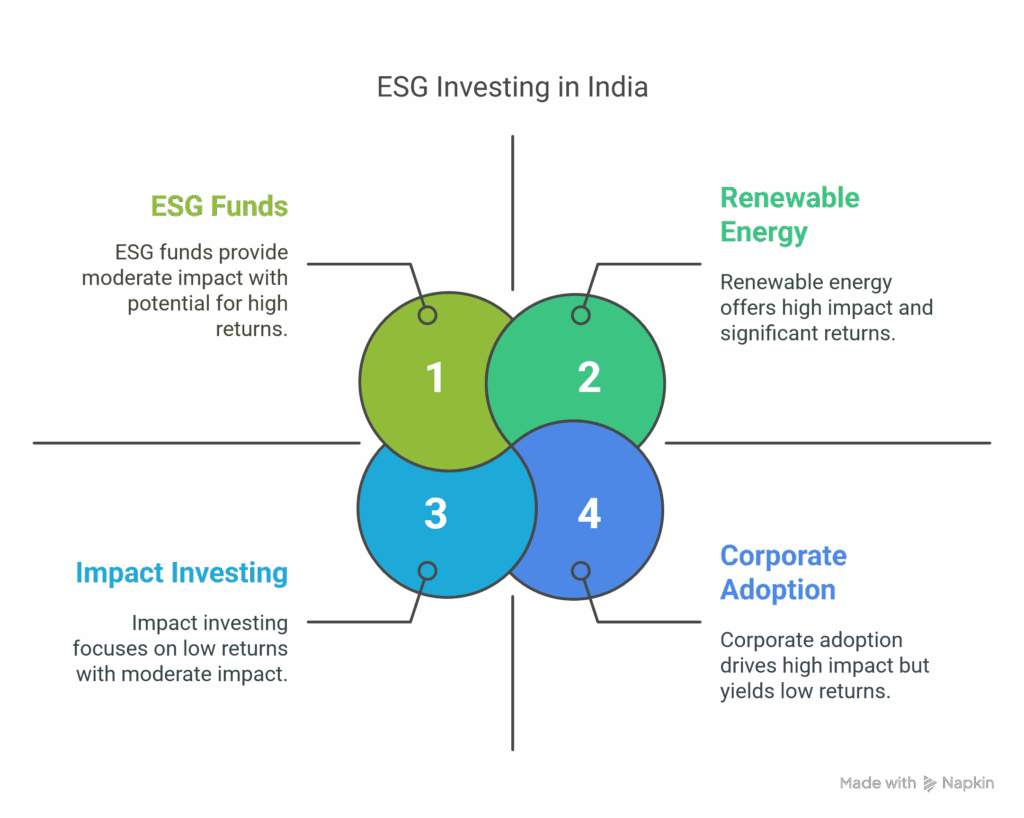
4. Corporate Adoption of ESG Principles
Companies are increasingly integrating ESG into core business strategies, not just as a compliance requirement but as a competitive differentiator. Firms in sectors like IT, manufacturing, energy, and finance are setting Net Zero targets, adopting circular economy models, and enhancing diversity and inclusion efforts.
Opportunities for Investors
1. Green Energy & Renewables
India’s goal of achieving 500 GW of renewable energy by 2030 is creating significant investment opportunities in:
- Solar and wind energy
- Electric vehicles (EVs)
- Battery storage technologies
2. ESG-Themed Funds
Investors can access ESG opportunities through mutual funds and ETFs that focus on:
- Clean technology
- Ethical companies
- Sustainable infrastructure
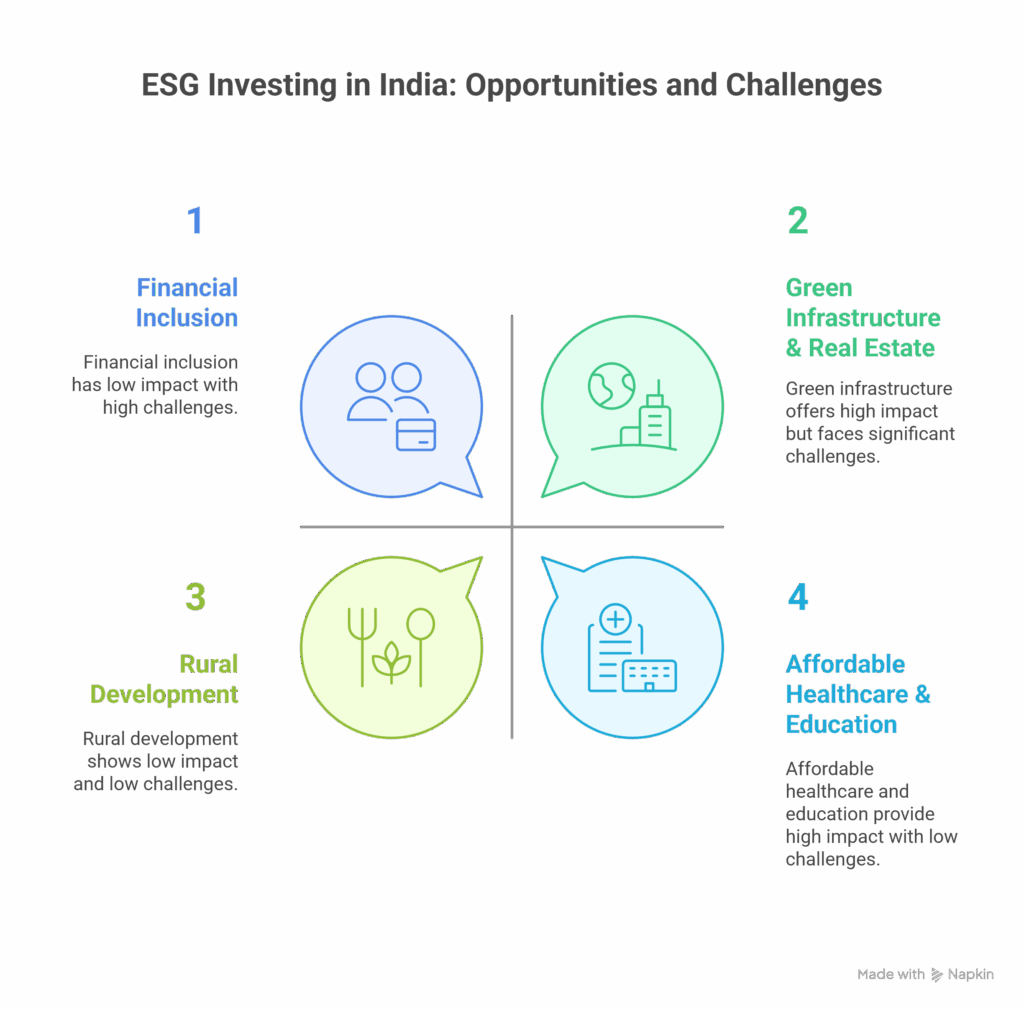
3. Impact Investing
Beyond financial returns, many investors are seeking social and environmental impact. Impact investing in India focuses on areas like:
- Financial inclusion
- Affordable healthcare and education
- Rural development
4. Green Infrastructure & Real Estate
The rise of smart cities, sustainable urban infrastructure, and green buildings is attracting ESG-focused capital into real estate and construction.
Challenges to Consider
While ESG investing in India is promising, several challenges persist:
- Lack of Standardization: ESG ratings vary widely across agencies, leading to inconsistencies.
- Greenwashing Risks: Some firms may exaggerate sustainability claims.
- Limited Awareness: Both investors and businesses need greater ESG literacy.
- Valuation Concerns: ESG-compliant companies often command a premium, which may affect returns.
The Road Ahead
India’s ESG landscape is rapidly evolving, supported by:
- Stronger regulatory frameworks
- Global capital inflows into sustainability
- Technological advancements such as AI-driven ESG analytics
Experts forecast that India’s ESG investment market could grow at a compound annual growth rate (CAGR) of over 20% in the coming years.
Conclusion
The rise of ESG investing in India presents both an opportunity and a responsibility. For investors, it offers a chance to align financial goals with ethical and environmental values. For businesses, it opens the door to long-term sustainability, resilience, and global competitiveness.
As India marches towards becoming a $5 trillion economy, ESG investing will undoubtedly play a pivotal role in shaping a more sustainable, equitable, and prosperous future.
Key Takeaways:
- ESG investing in India is gaining momentum due to regulations, investor interest, and corporate adoption.
- Renewable energy, ESG funds, and impact investing present promising opportunities.
- Challenges around standardization and awareness need to be addressed.
- The future of ESG in India is bright, offering potential for both impact and returns.