
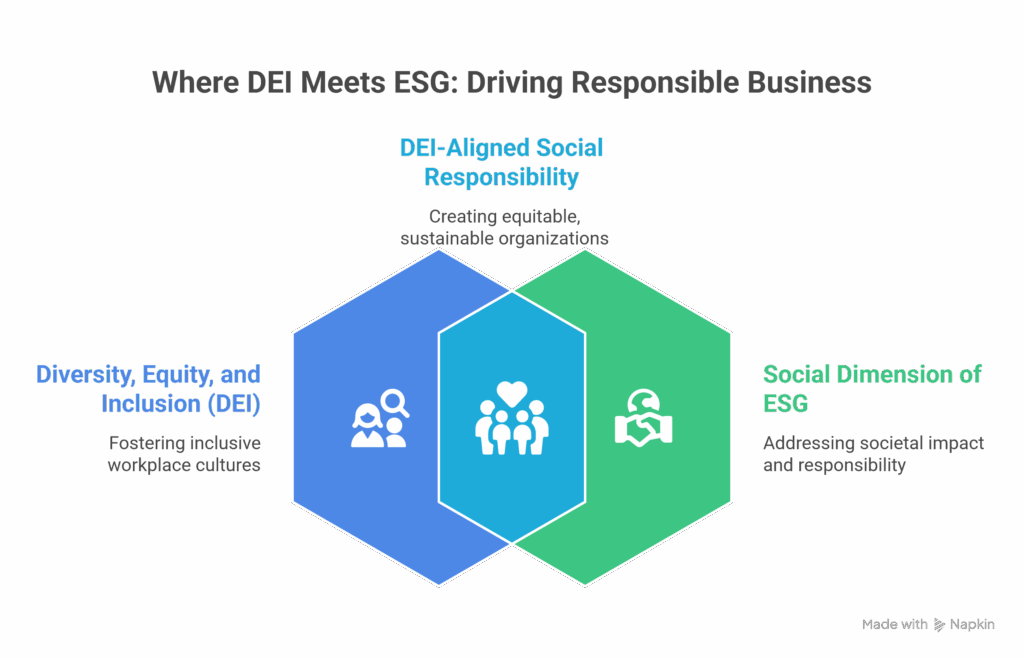
In an increasingly interconnected and socially conscious world, businesses are expected to uphold more than just financial performance. Investors, regulators, and stakeholders are holding organizations accountable for how they address social equity, environmental responsibility, and corporate governance. Within this context, Diversity, Equity, and Inclusion (DEI) has emerged as a cornerstone of the Social dimension in the ESG (Environmental, Social, and Governance) paradigm.
At EcoStrateGix, we help organizations integrate DEI into their ESG frameworks, ensuring compliance, enhancing value creation, and aligning with global standards such as BRSR (Business Responsibility and Sustainability Reporting), UN Sustainable Development Goals (UNSDG), TCFD (Task Force on Climate-related Financial Disclosures), and GRI (Global Reporting Initiative).
Why DEI is Central to ESG Performance
1. People-Centric Sustainability
A strong DEI agenda fosters an inclusive workplace where all individuals, regardless of gender, race, disability, or socio-economic background, have equal opportunities. This inclusivity not only builds a more just society but also translates into higher employee engagement, innovation, and organizational resilience.
“DEI is no longer a moral imperative alone—it’s a measurable business driver, fully embedded in ESG priorities.”
— EcoStrateGix Strategy Team
Aligning DEI with Leading ESG Frameworks
1. GRI Standards (Global Reporting Initiative)
GRI 405 (Diversity and Equal Opportunity) and GRI 406 (Non-discrimination) offer concrete metrics and disclosures on workforce diversity, pay equity, and anti-discrimination policies.
Key GRI DEI Indicators:
- Diversity of governance bodies and employees (GRI 405-1)
- Ratio of basic salary and remuneration of women to men (GRI 405-2)
- Incidents of discrimination and corrective actions (GRI 406-1)
EcoStrateGix Tip:
We help organizations structure GRI-aligned DEI disclosures that go beyond numbers—highlighting inclusive policies, training initiatives, and culture transformation.
2. BRSR (India’s SEBI-Mandated ESG Disclosure Format)
India’s BRSR framework mandates businesses to disclose their performance across nine principles aligned with the National Guidelines on Responsible Business Conduct (NGRBC). Principle 5: Respect and promote human rights and Principle 3: Provide equal opportunity directly intersect with DEI.
Relevant BRSR DEI Parameters:
- Employee gender diversity (including leadership roles)
- Turnover rate disaggregated by gender and social group
- Inclusivity policies for persons with disabilities (PwDs), LGBTQ+ community
- Redressal mechanisms for harassment and discrimination
EcoStrateGix Approach:
We support BRSR-aligned DEI audits, develop inclusive workplace policies, and help embed DEI into materiality assessments.
3. UNSDG (United Nations Sustainable Development Goals)
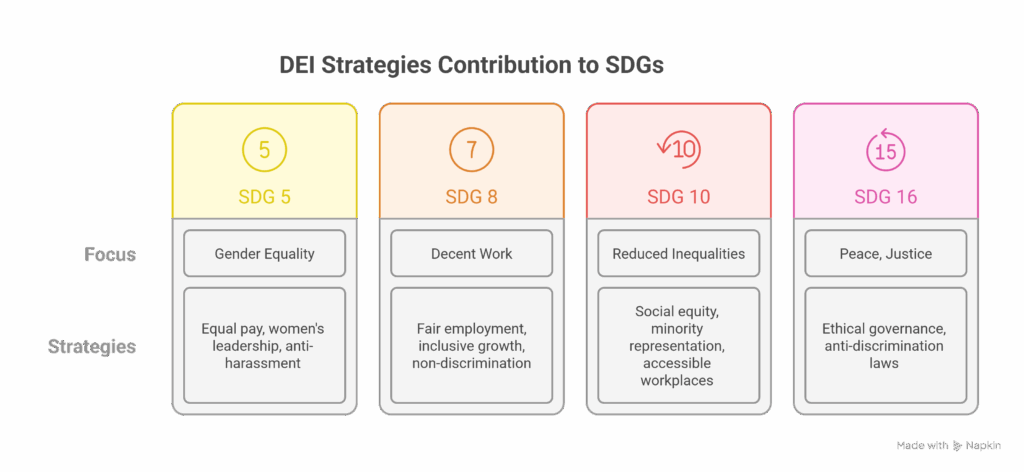
DEI strategies contribute directly to several SDGs, positioning organizations as agents of global change:
| UNSDG | Relevance to DEI |
|---|---|
| SDG 5 – Gender Equality | Equal pay, women’s leadership, anti-harassment |
| SDG 8 – Decent Work | Fair employment, inclusive growth, non-discrimination |
| SDG 10 – Reduced Inequalities | Social equity, minority representation, accessible workplaces |
| SDG 16 – Peace, Justice, and Strong Institutions | Ethical governance, anti-discrimination laws |
EcoStrateGix Solution:
We help map internal DEI strategies to SDG targets, enabling organizations to communicate impact effectively in sustainability reports and integrated disclosures.
4. TCFD (Task Force on Climate-related Financial Disclosures)
While TCFD primarily focuses on climate-related risks, the governance and risk management pillars are highly relevant for DEI. Climate adaptation plans must consider the disproportionate impact of climate risks on marginalized communities and vulnerable employee segments.
Examples of DEI in Climate Disclosures:
- Inclusive governance: Diverse boards overseeing climate strategies
- Workforce resilience: Climate safety protocols inclusive of all genders and abilities
- Social impact assessments on vulnerable populations
EcoStrateGix Perspective:
Integrating DEI into climate risk governance enhances risk resilience, meets stakeholder expectations, and strengthens your TCFD disclosures.
Best Practices: Building a DEI-Aligned ESG Strategy
| Pillar | DEI Integration |
|---|---|
| Governance | Establish DEI committees; link executive compensation to DEI outcomes |
| Policy | Develop inclusive hiring, parental leave, and anti-bias frameworks |
| Training | Deliver continuous unconscious bias and allyship training |
| Measurement | Use dashboards to track workforce demographics, pay gaps, and inclusion sentiment |
| Reporting | Disclose DEI performance in BRSR, GRI, and Integrated Reports |
DEI Metrics Investors and Regulators Care About
- % women in leadership roles
- Pay equity ratio (gender, caste, disability)
- Attrition rate by gender and social group
- Training hours on DEI and ethics
- Incident reporting and resolution time for discrimination cases
- Accessibility compliance in infrastructure and technology
Conclusion: DEI as a Strategic ESG Lever
Diversity, Equity, and Inclusion is not just an HR function—it is a strategic ESG driver. Companies that embed DEI into their sustainability strategy stand to benefit from:
✅ Enhanced brand reputation
✅ Greater investor trust
✅ Improved innovation and talent retention
✅ Alignment with global ESG standards
At EcoStrateGix, we specialize in tailoring DEI strategies that meet both regulatory and aspirational ESG goals. Whether you’re reporting under BRSR, aligning with UNSDGs, or building climate governance under TCFD, we partner with you to make DEI a competitive advantage.
Ready to embed DEI into your ESG framework?
Connect with EcoStrateGix for a customized ESG-DEI roadmap.