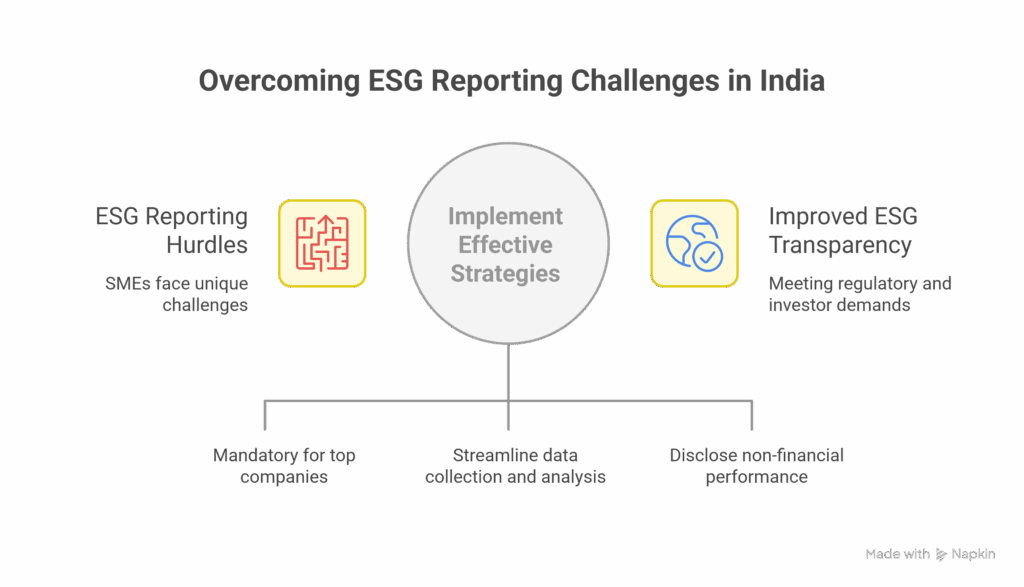

Environmental, Social, and Governance (ESG) reporting is no longer just a global trend; it’s a critical reality for businesses in India. Driven by regulatory mandates, investor demands, and growing public awareness, companies are increasingly expected to disclose their non-financial performance. The Securities and Exchange Board of India (SEBI) has been a key driver, introducing the Business Responsibility and Sustainability Reporting (BRSR) framework, which is mandatory for the top 1000 listed companies.
While this push towards greater transparency is a positive step, the journey is not without its challenges. Indian companies, particularly Small and Medium-sized Enterprises (SMEs) that are part of the supply chain of larger corporations, face unique hurdles. However, with the right strategies and tools, these challenges can be effectively overcome.
The Challenges of ESG Reporting in India
1. Lack of Standardized Frameworks and Data: One of the most significant challenges is the absence of a single, universally accepted ESG reporting framework. While the BRSR provides a structure, companies often struggle with the sheer volume and complexity of data points required. The data is often decentralized, siloed across different departments (finance, operations, HR, etc.), and in various formats, making it difficult to collect, consolidate, and verify. For SMEs, this can be even more daunting as they may lack the resources and expertise to set up robust data collection processes from scratch.
2. Evolving Regulations and Compliance Burden: The regulatory landscape for ESG is constantly evolving. Staying informed about new requirements and ensuring compliance can be resource-intensive. Companies need to be agile and adapt their reporting practices as new standards are introduced. For example, SEBI’s introduction of the “BRSR Core” with assurance requirements for a subset of disclosures adds another layer of complexity.
3. Defining and Quantifying ESG Risks: Moving beyond simple data collection, companies must also be able to define, quantify, and report on ESG-related risks. Many of these risks, such as the impact of climate change on a company’s operations or reputational damage from a social controversy, are not easily quantifiable in financial terms. This requires a shift in mindset and the development of new risk management frameworks.
4. Limited Awareness and Expertise: While larger corporations may have dedicated sustainability teams, many Indian companies still have limited awareness and understanding of ESG principles. There is a shortage of skilled professionals who can not only navigate the reporting frameworks but also translate ESG performance into a compelling narrative that resonates with stakeholders.
5. Supply Chain Disclosures: With the BRSR framework requiring disclosures on a company’s value chain, the challenge extends beyond a single entity. Companies must now work with their upstream and downstream partners, many of which are SMEs, to collect and report on their ESG data. This can be a major challenge due to the lack of preparedness and resources among smaller suppliers.
Solutions for Effective ESG Reporting
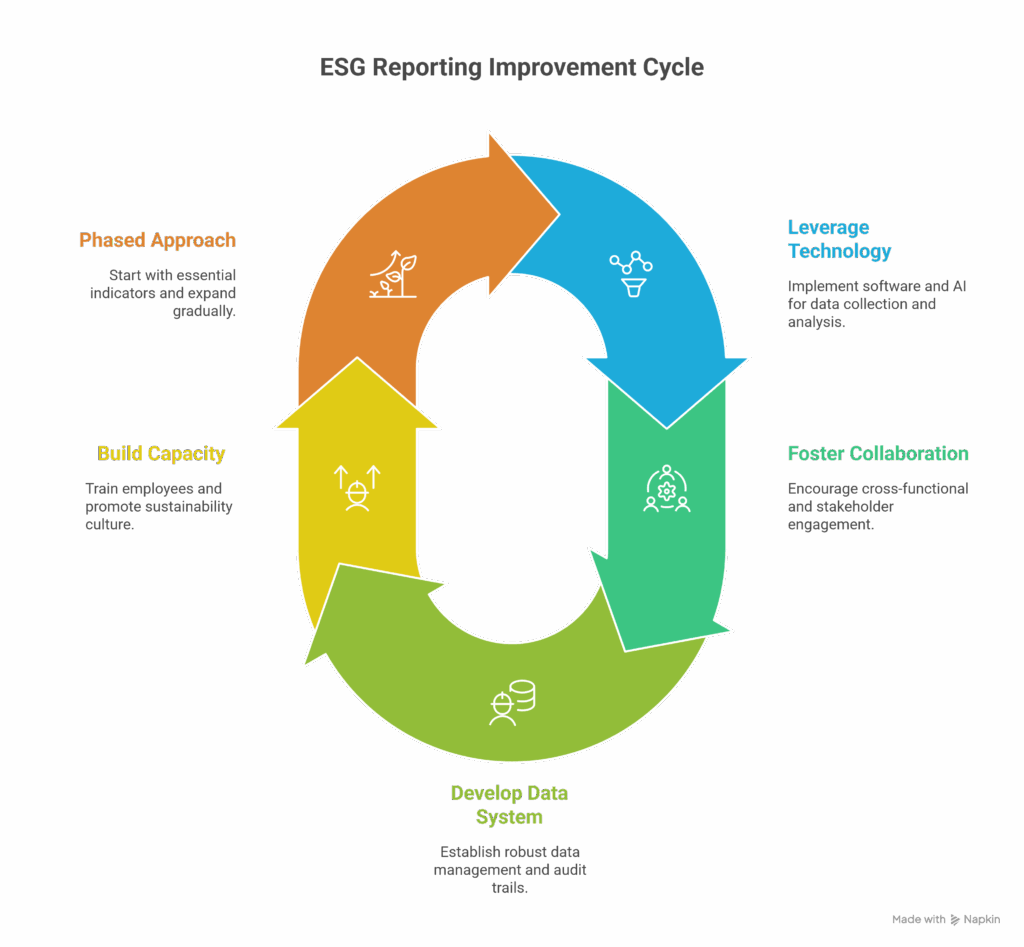
1. Leverage Technology and Automation: Technology is the most potent solution to many of the challenges. ESG reporting software and platforms can automate data collection from various sources, reducing manual effort and minimizing errors. These tools can centralize data, ensure data integrity, and generate reports that align with multiple frameworks like BRSR, GRI, and SASB. AI and machine learning can also be used to analyze vast amounts of unstructured data and provide valuable insights.
2. Foster Internal and External Collaboration: ESG reporting is not the sole responsibility of the sustainability team. It requires a cross-functional effort. Companies must foster collaboration between departments like finance, operations, HR, and legal to ensure that all relevant data is captured. Furthermore, engaging with stakeholders—including investors, regulators, and supply chain partners—is crucial for understanding their expectations and building trust.
3. Develop a Robust Data Management System: Before jumping into reporting, companies need to establish a clear and robust data management system. This includes identifying the key ESG metrics relevant to their business (materiality assessment), defining clear methodologies for data collection, and implementing internal controls to ensure data accuracy and reliability. A clear audit trail is essential for providing assurance to stakeholders.
4. Capacity Building and Training: To address the knowledge gap, companies should invest in training and capacity building for their employees. This could involve workshops on ESG principles, specific reporting frameworks, and the use of technology for data management. Encouraging a culture of sustainability from the top down is also critical for long-term success.
5. Phased Approach and Peer Learning: For companies just starting their ESG journey, a phased approach is advisable. Start by focusing on the “essential” indicators of the BRSR and gradually expand to “leadership” indicators. Learning from the success stories of Indian pioneers like Infosys, ITC, and Tata Steel can also provide valuable insights and a roadmap for building a robust ESG program. These companies have demonstrated that ESG is not just a compliance exercise but a strategic tool for driving innovation, attracting talent, and enhancing brand value.
Conclusion
The Indian market is at a crossroads where ESG reporting is transitioning from a voluntary practice to a mandatory requirement. While the challenges are real, they are not insurmountable. By embracing technology, fostering collaboration, investing in expertise, and taking a strategic, phased approach, Indian companies can not only meet their reporting obligations but also unlock new opportunities for sustainable growth, attract responsible capital, and build a more resilient and responsible future.
Contact EcoStrateGix for end-to-end ESG consulting, including support with climate disclosures, ESG frameworks, and sustainable transformation strategies.
📩 Email: contact@ecostrategix.com | 🌐 Website: www.ecostrategix.com Let’s build a resilient and responsible future together.