
In the ever-evolving ESG (Environmental, Social, and Governance) landscape, technology is proving to be more than just an enabler—it is becoming a critical driver of social impact. While environmental initiatives often grab headlines, the ‘S’ in ESG—Social—remains a foundational pillar that touches lives, shapes communities, and defines corporate legacy.
From equitable workplaces to inclusive growth, the social dimension of ESG is where technology can deliver real, measurable progress. As organizations seek to align their business goals with global sustainability and human development objectives, here’s how digital tools are reshaping the way we approach social responsibility.
1. Turning Data into Social Intelligence
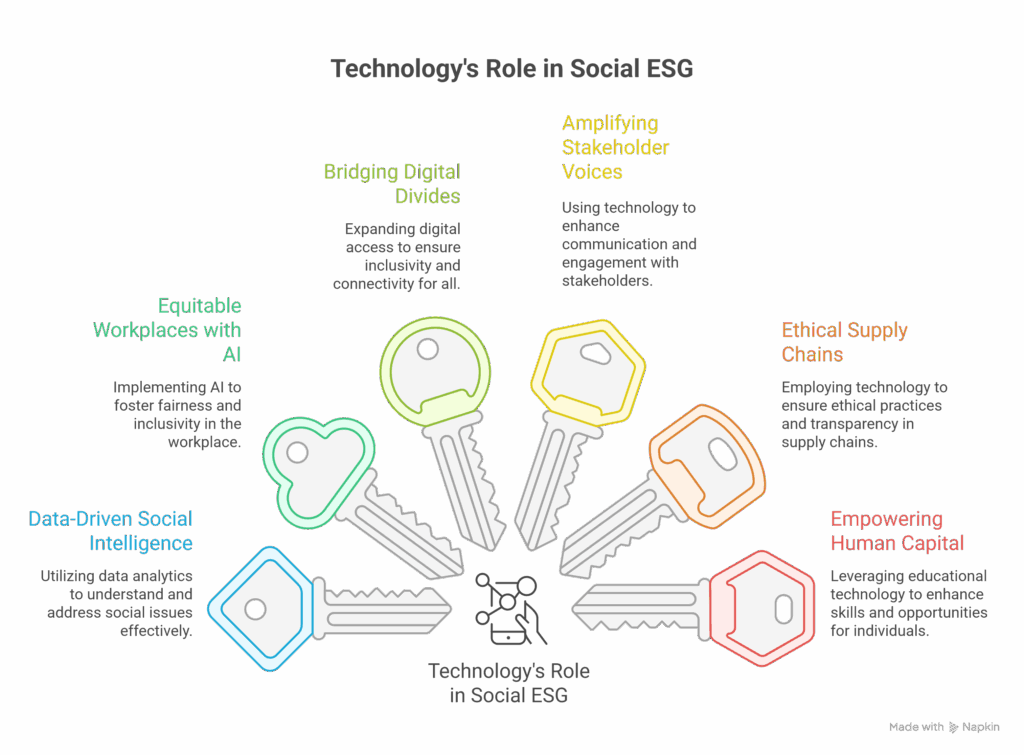
With the rise of big data and analytics, companies can now track social indicators such as workforce diversity, employee well-being, human rights compliance, and community outreach efforts with unprecedented accuracy. Data dashboards and AI-driven insights empower decision-makers to identify inequities, monitor progress, and adjust strategies proactively. This evidence-based approach strengthens both accountability and impact.
2. Building Equitable Workplaces with AI
Artificial Intelligence (AI) is reshaping hiring practices and workplace culture. AI-driven recruitment tools help reduce unconscious bias by anonymizing candidate profiles, enabling fairer and more inclusive hiring decisions. Natural Language Processing (NLP) is also being used to assess internal communication and ensure inclusive language across organizational messaging.
3. Bridging Digital Divides with Connectivity
In developing regions, access to digital infrastructure is directly linked to social progress. From remote learning in rural areas to mobile banking for the unbanked, technology helps bridge access gaps. Investments in broadband, mobile networks, and smart devices can empower underserved communities with education, health services, and economic opportunities.
4. Amplifying Stakeholder Voices
Digital platforms and social media analytics allow organizations to engage meaningfully with stakeholders—from employees and customers to local communities. Real-time feedback tools and sentiment analysis enable businesses to listen, respond, and evolve in sync with public expectations, building trust and responsiveness.
5. Ethical Supply Chains through Tech
Blockchain, RFID tracking, and digital traceability tools are revolutionizing supply chain transparency. These technologies help ensure fair labor practices, ethical sourcing, and zero tolerance for exploitation, especially in global value chains where violations often go unchecked. Consumers and investors increasingly demand proof, and technology delivers it.
6. Empowering Human Capital through EdTech
Upskilling and lifelong learning are essential for inclusive growth. EdTech platforms offer remote training, mentorship, and certification programs that equip youth, women, and marginalized groups with the skills needed for the future of work. AI-powered adaptive learning also makes education more personalized and scalable.
Conclusion: Tech for People, Not Just Profits
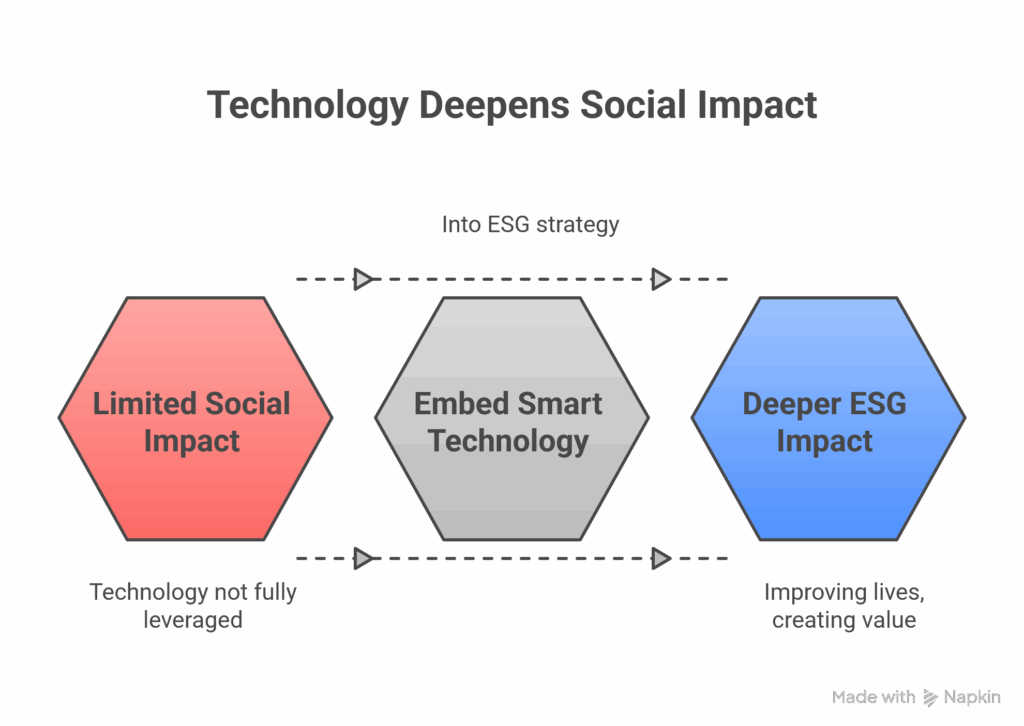
Technology is no longer just a business tool—it is a social enabler. Organizations that leverage technology to deepen their social impact are better positioned to meet the expectations of a purpose-driven market and workforce. More importantly, they become agents of real change—improving lives while creating long-term value.
At EcoStrateGix, we believe that embedding smart technology into your ESG strategy is not just good practice—it’s a strategic imperative for resilience and relevance in the 21st century.
🔍 Want to learn how your organization can harness technology for deeper ESG impact?
💬 Connect with our team at EcoStrateGix
🌐 www.ecostrategix.com | ✉️ info@ecostrategix.com