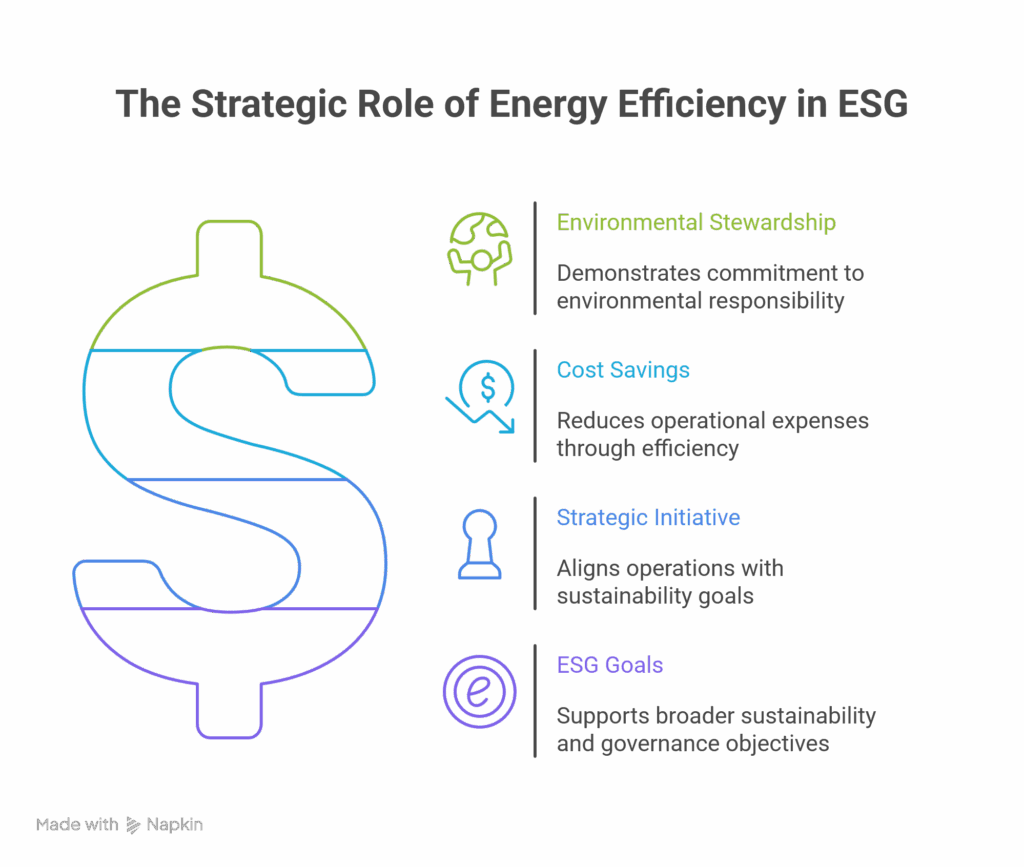

In today’s environmentally conscious world, organizations are increasingly expected to align their operations with the principles of sustainability and responsible governance. Energy efficiency in the workplace is not just a cost-saving tactic—it is a strategic initiative that directly supports Environmental, Social, and Governance (ESG) goals. Reducing office energy use demonstrates an organization’s commitment to the “E” in ESG, signaling leadership in environmental stewardship.
Why It Matters
Energy consumption in offices contributes significantly to a company’s carbon footprint. Lighting, HVAC systems, electronics, and idle equipment all add to emissions and operational costs. By adopting simple, energy-efficient practices, businesses can not only meet regulatory expectations and stakeholder demands but also create a more comfortable and productive environment for employees.
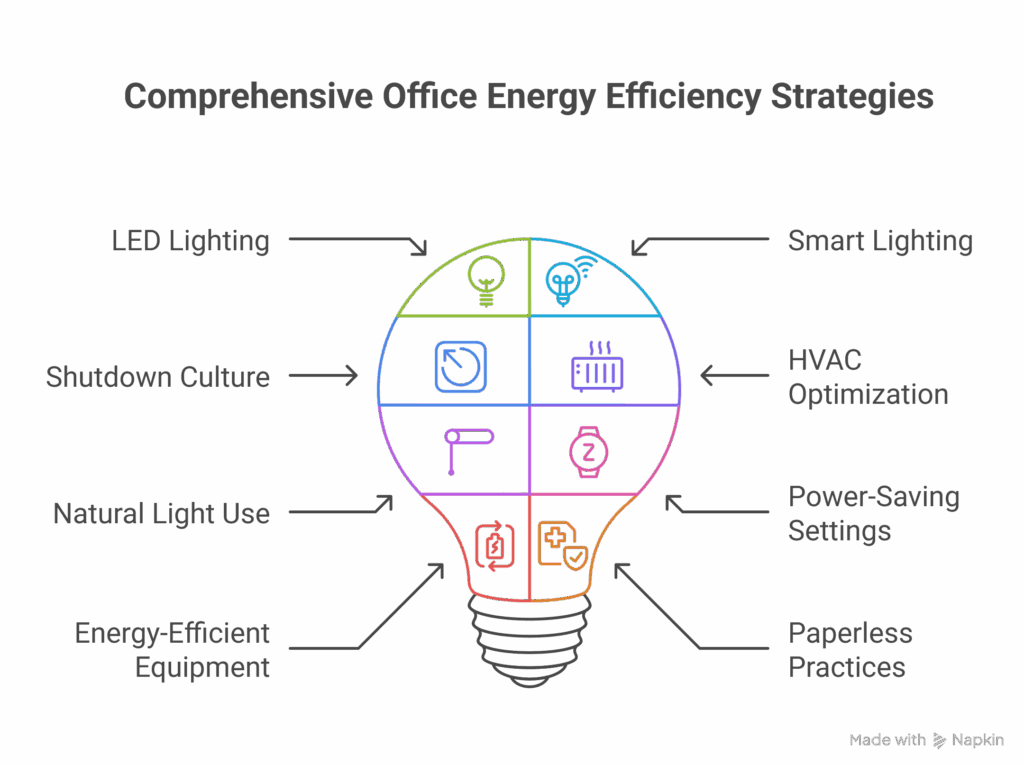
Simple and Effective Energy-Saving Strategies
- Switch to LED Lighting
Replace incandescent and fluorescent lights with energy-efficient LED bulbs. They consume up to 75% less energy and last significantly longer. - Implement Smart Lighting and Occupancy Sensors
Use motion detectors and daylight sensors to automatically turn off lights in unused areas such as conference rooms and breakrooms. - Promote a Shutdown Culture
Encourage employees to switch off monitors, printers, and non-essential equipment when not in use, especially overnight and on weekends. - Optimize HVAC Systems
Regularly service heating and cooling systems. Use programmable thermostats to avoid unnecessary cooling or heating during non-working hours. - Encourage Natural Light Use
Design workspaces to maximize natural lighting, reducing the need for artificial lights during the day and boosting employee well-being. - Enable Power-Saving Settings on Devices
Activate sleep or hibernate modes on computers and other electronics to reduce standby power consumption. - Use Energy-Efficient Office Equipment
Invest in ENERGY STAR-certified appliances and equipment that consume less energy without compromising performance. - Go Paperless Where Possible
Reducing printing not only saves paper but also lowers the energy needed for printers, copiers, and shredders.
ESG Integration and Impact
Implementing these simple strategies can significantly reduce greenhouse gas emissions, enhance operational efficiency, and contribute positively to ESG reporting and sustainability scores. From a governance perspective, it shows that leadership is proactive about long-term value creation and regulatory compliance. Socially, it fosters a culture of accountability and collective responsibility among employees.
Final Thoughts
Sustainability doesn’t have to be complicated. Small actions can create large impacts when driven by clear ESG commitments. At EcoStrateGixis, we help organizations design tailored ESG strategies that embed environmental consciousness into every operational layer—from energy management to stakeholder engagement.
Ready to start your sustainability journey?
Contact EcoStrateGix for end-to-end ESG consulting, including support with climate disclosures, ESG frameworks, and sustainable transformation strategies.
📩 Email: contact@ecostrategix.com | 🌐 Website: www.ecostrategix.com Let’s build a resilient and responsible future together.